bbdbuy Standing Commute Shoe Review Guide
bbdbuy Standing Commute Shoe Review Guide
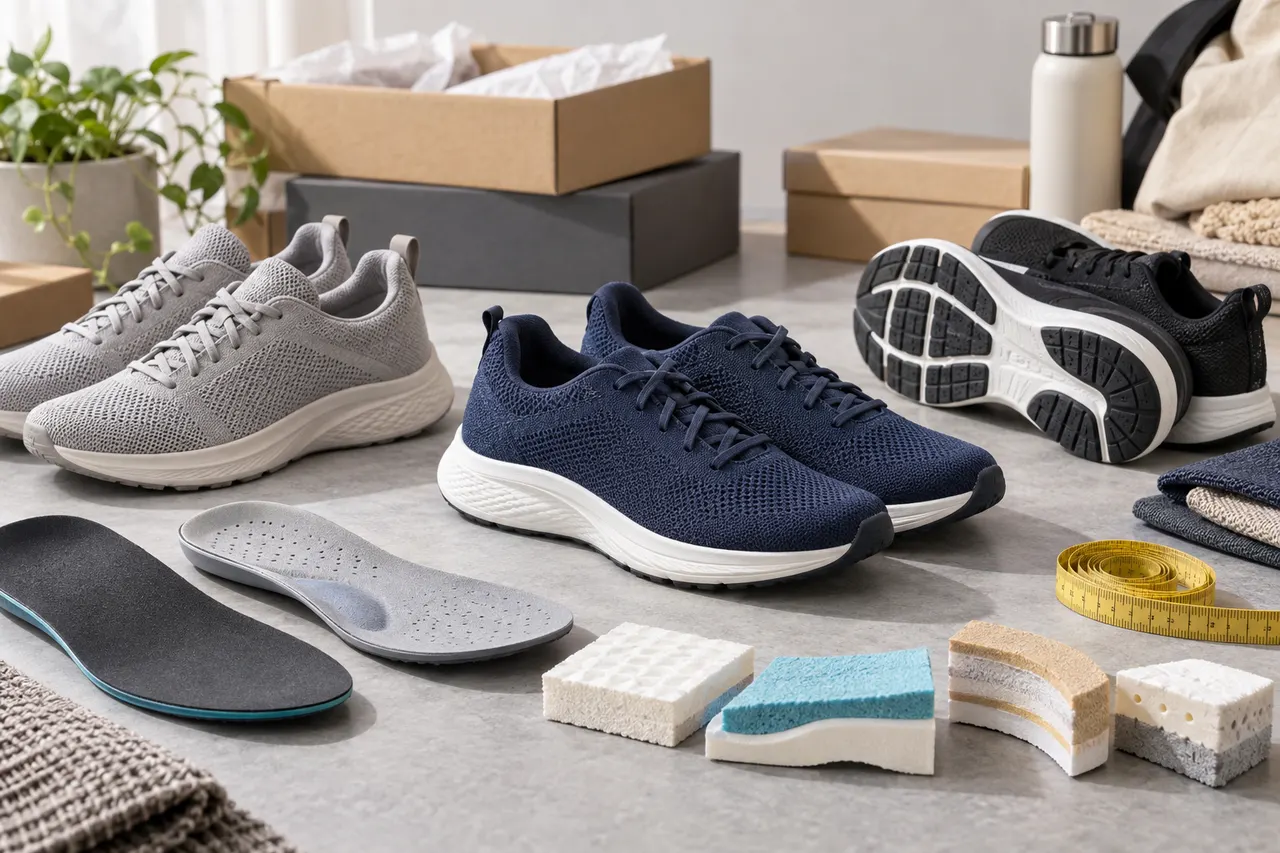
Caption: Standing commute shoe selection thought process.
Review date: September 9, 2026. This article applies to buyers who are browsing shoes via spreadsheets on bbdbuysheets.net and preparing to filter standing commute shoes by combining product images and QC photos. It does not apply to those who need medical diagnosis, orthotic prescriptions, brand authenticity guarantees, or have already determined that they must purchase a specific model.
First, define the foot tasks of standing commutes
Standing commute shoes are not simply about "soft or not." What really needs to be addressed are the repeated tasks throughout the day: walking or squeezing onto the subway in the morning and evening, continuous standing at work, short-distance brisk walking, moving on stairs or wet and slippery surfaces, and the fatigue that the soles of the feet still have to bear after work. 👟
Before placing an order, write down your own scenario clearly; this is more reliable than directly asking "which pair is the most comfortable":
How long is each continuous standing period: 2 hours, 4 hours, or 8+ hours.
What is the commuting surface: cement floor, mall tiles, office carpet, or outdoor pavement.
What are the foot shape issues: wide feet, high instep, flat feet, high arches, narrow heels, or toes that easily hit the front.
Acceptable shoe weight and thickness: thicker soles may provide more cushioning but may also be stuffier, heavier, or less stable.
Is a formal look needed: some work settings cannot accommodate overly athletic shoes.
If these conditions are not written down clearly, words like "comfortable," "cloud-like," and "standing all day without fatigue" in community reviews can easily mislead. They may come from completely different body weights, foot shapes, surfaces, and work intensities.
What community feedback can and cannot prove
The most useful part of community reviews is that they expose real buyers' concerns. For example, some people repeatedly mention narrow toe boxes, heel rubbing, overly soft soles, small sizing, slippery on rainy days, or arch soreness after long walks. These can remind you to focus on checking these aspects in bbdbuy product images and QC photos.
However, community feedback cannot prove three things: first, it cannot prove that a particular shoe will definitely fit your feet; second, it cannot prove that the seller's current batch is still the same; third, it cannot prove that the brand, materials, inventory, price, or after-sales policies are valid long-term. Shoe products are especially susceptible to batch, size range, seller's shooting angle, and individual foot shape.
A more prudent approach is to treat community opinions as a risk checklist, not as a purchase conclusion. If many people say "wide forefoot," you should check the toe shape, insole length marking, and QC overhead shot; if someone says "heel rubbing," you should check the heel collar height, opening material, and tongue thickness; if someone says "very soft," you should also judge whether it has enough support, rather than just treating softness as an advantage.
High-frequency controversy 1: Soft soles comfortable or support more important?
The most common controversy for standing shoes is whether soft soles or support is more important. During short-term try-on, soft soles easily give immediate comfort; but when standing for long periods, an overly soft midsole may cause the foot to constantly seek balance, making the arch and calf more fatigued. 🙂
When choosing, you can break it down by shift duration:
Usage scenario | What to prioritize | Situations to avoid |
|---|---|---|
2 to 4 hours of light standing | Forefoot cushioning, upper not pressing on foot, heel not rubbing | Obviously pointed narrow toe, too thin sole |
4 to 8 hours of commute plus standing | Midsole rebound, arch support, stable sole area | Only soft without stability, overly heavy shoe, obvious outward roll |
8+ hours or hard surface work | Support structure, anti-slip tread, space for replaceable insoles | Excessive thick soles, poor ankle lock, low size tolerance |
When choosing on bbdbuy, don't just look at the sole thickness in the main product image. Thick does not mean good cushioning, and soft does not mean suitable for standing. A more actionable judgment is: check if the sole contact area is sufficient, if the heel has obvious support structure, if the shoe body allows the foot to sway side to side inside, and if there is room to replace the insole with a more suitable supportive one.
High-frequency controversy 2: How to judge for wide feet, flat feet, and toe box space
Wide-foot buyers should be especially wary of shoes that "look round but actually narrow in the forefoot." Product images often use side or angled shots, which can hide toe width. If QC photos have overhead shots, prioritize looking at the widest part of the forefoot and where the toe box tapers, not just the size label.
Flat-foot buyers need to pay attention to two things: first, the sole should not be so soft that it completely collapses; second, the shoe should not be so narrow that it presses on the inner arch. If you already need supportive insoles, confirm the interior height and insole removability. Do not assume all athletic shoes can accommodate additional insoles.
You can check in this order:
First check if the size chart includes insole length, not just EU, US, or CN sizes.
Then look at the toe box overhead shot to judge if toes have lateral space.
Next look at the tongue and upper opening; high-instep buyers should avoid upper pressure.
Finally look at the heel cup depth; those with narrow heels should avoid heel slippage when walking.
If the page only provides style images without clear size information, toe box angles, or QC photos, it's recommended to mark it as pending confirmation rather than ordering directly. 📏
High-frequency controversy 3: Heel lock and ankle friction after standing
Many commute shoes don't show problems at first, but the real issues surface at the heel. After continuous walking or standing, if the heel cup is too hard, the collar too high, the edge rough, or the size too large causing heel friction up and down, blisters can easily occur. Conversely, if the heel is too soft and the foot moves around inside, fatigue increases.
When looking at images, focus on three positions: whether the heel edge has obvious hard piping, whether the collar is close to the ankle bone, and whether the lacing system can secure the midfoot. For those who need to stand for long periods, heel lock is not just about preventing heel slippage; it also relates to whether the forefoot repeatedly hits the toe box.
If community members mention "ankle rubbing" or "heel slippage after long walks," connect that feedback with QC photos before ordering. If the shoe itself has a high heel and hard collar, and you have a history of new shoes rubbing your heels, that risk cannot be fully solved by thick socks.
Use bbdbuy product images and QC photos to complete the evidence
The value of bbdbuysheets.net is that it uses spreadsheets to centrally display filterable product information. Buyers can enter specific products from the spreadsheet and then make judgments by combining product images, size information, and QC photos. The key here is not to treat the spreadsheet as a ranking but as a candidate pool.
QC photos are suitable for verifying the following:
Whether the actual color is close to the product image.
Whether the toe box width, sole thickness, and heel structure are clear.
Whether the left and right shoes look consistent, without obvious glue marks, misalignment, or stains.
Whether the shoe label, size tag, and packaging information match the order options.
Whether additional photos of the sole, anti-slip pattern, insole, or insole length measurement are needed.
QC photos cannot prove foot feel or fatigue after long standing. What they can do is reduce obvious appearance, sizing, and workmanship risks. For standing commute shoes, it is recommended to request verifiable supplementary photos at the warehouse stage, such as sole tread, toe box overhead, heel close-up, or insole length measurement, rather than discovering missing key angles after receiving the goods. 🧾
How to create a candidate shoe comparison record table
Do not compare dozens of shoes at once. First select 3 to 5 candidates from the bbdbuy spreadsheet that truly fit your work scenario, then create a simple record table. The purpose of the record is not to make the table look complete but to force yourself to write purchase reasons as verifiable conditions.
Record item | What to fill in | What to avoid writing |
|---|---|---|
Foot shape match | Specific conditions like wide feet, normal feet, high instep, narrow heel | "Should be comfortable" |
Evidence source | Product images, size chart, QC overhead shot, types of community feedback | "Everyone says good" |
Standing risks | Too soft, too heavy, narrow toe, heel rubbing, slippery sole | "No problems" |
Need additional photos | Insole length, sole, heel, insole, toe box width | "Decide at warehouse" |
Final decision | Buy, hold, change size, change shoe type | "Just order casually" |
This table only needs to serve one purchase decision. If a shoe lacks key evidence, downgrade it to backup; if a shoe looks good but conflicts with your foot shape, don't let appearance override the usage scenario.
Complete the standing commute decision checklist before ordering
Before ordering, compressing your choice into a checklist is more practical. ✅
I have confirmed whether my main task is commuting, standing, or both.
I know where I am most prone to problems: forefoot, arch, heel, ankle, or toes.
I have not treated a single community praise as proof of suitability for me.
I have reviewed product images and available QC photos, focusing on toe box, heel, sole, and size label.
If I have wide feet or high instep, I have prioritized confirming toe box space and upper opening.
If I need to stand for 8+ hours, I have not chosen only the "softest" shoe but also considered support and stability.
I know that suitable shoes may need breaking in and are not a medical corrective tool.
I am prepared to request necessary additional photos at the warehouse stage, not just confirm shipping based on the main image.
The conclusion is simple: there is no universal answer for standing commute shoes. Soft soles suit short-term comfort, support suits long-term stability, wide feet need space, and narrow heels need locking. The bbdbuy spreadsheet and QC photos can help you turn community reviews into a verifiable evidence chain, but the final decision still comes back to your foot shape, shift duration, floor environment, and acceptable risks.
Agent platform shopping FAQ
1. Why do I need to use spreadsheets to shop on bbdbuysheets.net?
On bbdbuysheets.net, since most agent platforms do not display products directly, you need to use spreadsheets to find desired items and obtain purchase links. Alternatively, you can ask for help on Reddit or Discord, where recommended products are usually of good quality, but the entire purchase process can be very time-consuming. These spreadsheets are typically compiled from long-term information gathering on these platforms.
2. What categories of products are available on bbdbuysheets.net?
On bbdbuysheets.net, you can find a wide variety of product categories, including shoes, T-shirts, sweaters, hoodies, jeans, sweatpants, shorts, beach shorts, factory clearance items, down jackets, baseball shirts, shirts, hats, jewelry, bags, electronics, sunglasses, socks, underwear, and trendy collectibles.
3. How do I check quality control (QC) photos on bbdbuysheets.net?
When checking QC photos on bbdbuysheets.net, you should focus on the specific features of the purchased item. For shoes, check several key parts—such as the toe box, heel, and tongue—for stitching, shoe shape structure, and tongue thickness to determine if it is a high-quality product. For clothing, check details like the collar label, logo embroidery, fabric, and the neatness of the collar and cuffs.
4. What types of products are included in the spreadsheets on bbdbuysheets.net?
The spreadsheets on bbdbuysheets.net collect various products, including shoes, clothing, bags, accessories, jerseys, perfumes, hats, scarves, belts, and various home and lifestyle items.
Browse our latest products and find your next favorite item.