bbdbuy Treadmill Shoe Stability Guide
bbdbuy Treadmill Shoe Stability Guide
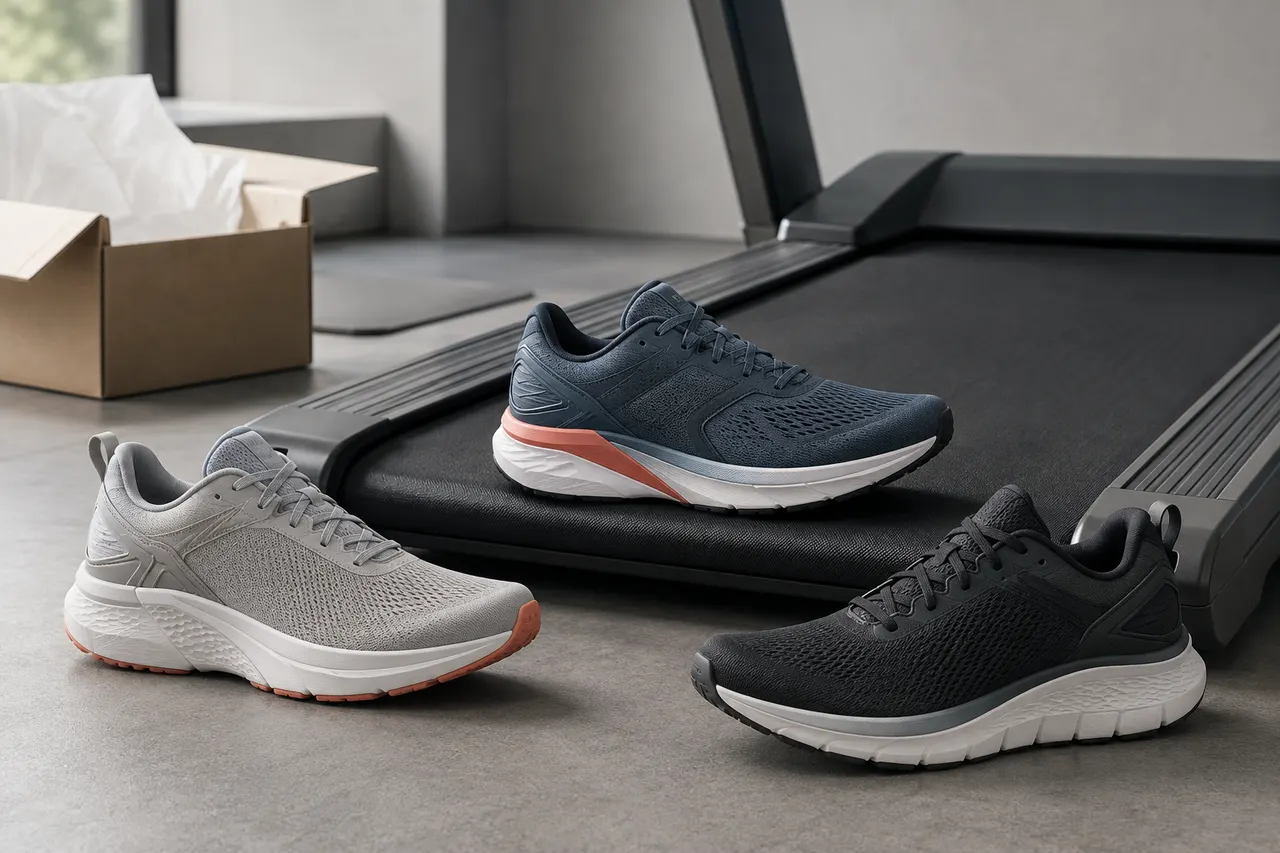
A treadmill's belt is flat and its pace is controllable, but that doesn't automatically eliminate unstable landings, foot slippage inside the shoe, or form breakdown after fatigue. The real problem to solve is this: after finding candidate running shoes on bbdbuysheets.net, how can you use the information visible on product pages and warehouse QC photos to filter out models with unsuitable structure, insufficient evidence, or excessive sizing risk?
This article provides a pre-purchase inspection method. After reading, you'll be able to build a candidate list based on foot strike pattern and training intensity, and know which conclusions must wait for physical measurement or professional evaluation to confirm. This article does not apply to injury diagnosis, orthotic prescriptions, and cannot judge midsole softness, true weight, durability, or slip resistance from photos alone.
No real-time prices, inventory, promotions, routes, shipping costs, or return policies are quoted in this article, because such information changes. Relevant facts should be re-verified on the corresponding entry at bbdbuysheets.net, the referenced product page, and the actual checkout page on the day of ordering, and save the date and screenshots. The information boundary verification date for this article is September 4, 2026.
Clarify Treadmill Training Type and Stability Needs
Start by recording the most common workouts over a week, rather than picking based on shoe appearance. Stability needs typically change with time, speed, incline, and fatigue level.
Easy jogging: Prioritize observing whether the heel and midfoot can be reliably secured, and whether the sole platform is stable enough.
Tempo runs or intervals: Besides fixation, also note the forefoot platform, lateral upper restraint, and risk of foot slippage inside the shoe at higher cadence.
Incline training: Heel fixation, collar wrap, and lacing adjustment are more important, because uphill movements may increase forefoot loading, while downhill may amplify the foot sliding forward.
Run-walk combinations: Need to balance natural flex during walking phases with landing control during running phases.
Then establish a screening direction based on your common foot strike point. Heel strikers can focus on the heel platform, heel cup, and outsole contact area; midfoot strikers should check if the midfoot is too narrow or if the sole shows obvious inward curvature; forefoot strikers need to examine the forefoot platform, flex zone, and upper fixation. Foot strike pattern is only a screening clue, not a medical diagnosis of pronation or supination. 🏃
Define What Product Information Can and Cannot Prove
Product titles, specs, and images can only support limited conclusions. Visible wide bases, sidewalls, heel structures, and number of eyelets can help judge design direction; they cannot prove that a shoe is stable or suitable for your foot type.
Product pages can usually be used to record model, sizing label, color, sole shape, upper structure, and seller claims. If the page does not provide measurement methods, so-called "lightweight," "high rebound," or "stable support" can only be regarded as seller descriptions, not directly converted into purchase conclusions.
QC photos are more suitable for checking whether the specific shoes received at the warehouse match the selected color and size label, and whether there are obvious appearance differences between the left and right shoes. They cannot replace a try-on test, nor reliably prove cushioning, friction, breathability, material composition, or long-term durability. 🔍
When building candidates on bbdbuysheets.net, save at least the entry name, corresponding product identifier, verification date, and missing fields for each. If an entry cannot be opened, the target page has no clear product name, or visible information is insufficient to confirm the specific shoe model, exclude it rather than guessing based on similar images.
Observe Sole Platform Width and Heel-to-Toe Drop Information
Stability screening starts with the sole outline. In top-down views, platforms that clearly extend to the sides at the heel and forefoot generally provide a larger visible contact base than narrow, high bases; but image perspective can exaggerate width, so it's best to look for direct top, direct rear, and lateral views for cross-checking.
Heel-to-toe drop must come from explicit labeling, not estimated from side photos. If the product page does not provide millimeter figures, record it as "not disclosed." Drop itself also has no universal optimum: it affects load distribution on the ankle and calf, but cannot determine stability alone.
When inspecting the sole, record:
Whether the heel platform is significantly narrower than the rear upper
Whether the midfoot is greatly narrowed or floating
Whether the outer edge of the forefoot provides continuous support
Whether the midsole sidewalls have obvious wrapping or guidance structures
Whether outsole rubber coverage is consistent left-right
Whether the page provides verifiable drop, stack height, or weight data
Do not simply equate "wider" with "better." Excessively wide, stiff, or geometrically mismatched soles can also affect natural gait.
Check Heel Cup, Collar, and Lacing Fixation Structure
Stability comes not only from the sole, but also from whether the foot moves forward-backward or side-to-side inside the shoe. When observing the heel area, simultaneously review the heel cup contour, collar height, padding symmetry, and whether pull tabs or decorative elements affect real structural judgment.
The lacing system should allow zoned adjustment. Beyond standard eyelets, additional heel lock eyelets, if present, can provide adjustment space for those prone to heel slippage, but effectiveness still depends on the last and foot shape. If the tongue is skewed, eyelet positions are obviously asymmetrical, or upper connections are deformed in photos, mark them as QC review items.
A thick collar is not necessarily more secure. Overly thick padding may squeeze the ankle or compress after use. If heel cup stiffness cannot be confirmed from images, write "cannot be judged from photos" and do not substitute appearance for evidence.
Compare Support Priorities for Jogging, Intervals, and Incline Training
The comparison table below is used to rank inspection priorities, not to indicate that any specific product has met requirements.
Training Scenario | Priority Observations | Common Risks | Minimum Evidence Before Order |
|---|---|---|---|
Easy jogging | Heel fixation, midfoot support, platform continuity | Foot shifting inside shoe after fatigue | Multi-angle product photos, sizing info, heel and sole QC photos |
Interval training | Forefoot platform, lacing restraint, upper lateral fixation | Forward sliding or side-to-side movement at higher speed | Forefoot top view, lacing structure, left-right symmetry photo |
Incline training | Heel cup, collar, forefoot flex zone | Increased forefoot pressure uphill, foot sliding forward downhill | Heel rear view, side view, insole or inner length info |
If one shoe is used for multiple training types, screen based on the highest-risk, highest-frequency scenario. For example, if you mainly jog weekly with occasional intervals, first ensure fixation and sizing, then consider speed performance; if high-intensity training accounts for a large proportion, candidates lacking weight, structure, or sizing evidence should not be retained based on looks alone. ⚙️
Use Product and QC Photos to Check for Left-Right Misalignment and Sole Abnormalities
After receiving QC photos, first confirm that the photos belong to the same order and the same pair of shoes, then inspect in a fixed order to avoid only focusing on the most prominent image.
Align left and right shoes from directly above, compare toe direction, upper centerline, and eyelet positions.
Observe heel centerline from directly behind, check for obvious tilting, collapse, or height difference between left and right shoes.
View lateral and medial sides, compare midsole sidewalls, bonding lines, and outsole edges.
Check the sole photo, confirm tread direction, rubber coverage, and left-right outline consistency.
Zoom in on size label, color, and model details, verify consistency with order selection.
Slight camera angle differences do not equal product misalignment. When doubt arises, request supplementary photos from the same plane, same distance, and similar angle, rather than drawing conclusions from perspective distortion. If repeated photos still show obvious centerline offset, sole warping, separation, or asymmetry between left and right shoes, apply for confirmation, exchange, or refund within the processing window, and save original photos and communication records.
Assess Sizing, Return, and Information Gap Risks
Sizing is a prerequisite for stability. Shoes that are too large may cause heel slippage and forward sliding, while too small may squeeze toes or force gait changes. Relying solely on the usual EU, US, or label numbers is insufficient because different lasts and seller markings may vary.
Prioritize finding insole length, inner length, forefoot width in millimeters or centimeters, and the measurement method. Measuring the removable insole of a well-fitting running shoe with the same method is more reliable for building a comparable record than directly measuring the foot and applying an unknown size chart. If the seller only provides label size without inner length or measurement instructions, raise the risk level.
Return conditions, warehouse processing deadlines, domestic return costs, and returnability after cross-border shipment are all highly volatile facts that must be verified on the actual order page. Do not assume that QC dissatisfaction guarantees free return or exchange, and do not let the warehouse ship without sufficient evidence.
If there is pain, recent injury, significant left-right foot difference, or a doctor has already given orthotic advice, stop self-judging with images and consult qualified medical or sports professionals. 🦶
Build a Candidate List and Complete Pre-Order Review
Each candidate can be managed with three statuses: "Pass," "Pending Confirmation," or "Eliminated." The list should include at least training scenario, common foot strike point, product identifier, sizing basis, sole platform evidence, heel fixation evidence, missing information, return policy verification date, and final decision.
Complete the following review before submitting an order:
The candidate truly corresponds to the main intensity of your treadmill training, not selected just for appearance
The product page is still accessible, and name, model, color, and size selection match
Price, inventory, currency, promotions, service fees, and estimated shipping have been verified on the day's page
Sizing conclusion has comparable measurement values, not just label conversion
Seller marketing terms are not treated as independent performance evidence
Required QC inspection angles and unacceptable defects have been predetermined
Return window, costs, operation entry, and restrictions after cross-border shipment have been checked
Clear decisions on missing information: ask more, accept risk, or eliminate
The direct benefit of this method is not a promise of fixed savings, but reducing repurchase and return costs caused by sizing errors, insufficient structural evidence, or unaddressed QC anomalies. Actual savings depend on candidate product prices, domestic return costs, warehouse handling fees, and international shipping, and should be calculated with actual order figures.
Its added costs are screening time, waiting for supplementary photos, and possible missed short-term stock. Meanwhile, photo judgment still retains risks of unverifiable feel and durability. This approach suits buyers willing to record evidence, with clear training scenarios, and able to carefully review at the warehouse stage; it is not recommended for those eager to ship, refusing to verify sizing, or needing professional injury and gait judgment.
Production note: This article was generated by the automated editorial process of Panda-Buy Editorial Desk, and the editorial perspective does not represent real consumer experience. The content only provides evidence verification and decision-making methods, and does not claim actual purchase, wearing, or testing of any shoe model. Prices, inventory, policies, and order status must still be independently confirmed by the reader on the transaction date.
Agent Platform Shopping FAQ
1. What should users new to agent services on the bbdbuysheets.net platform pay attention to?
New users who first contact Taobao agents through spreadsheet methods on bbdbuysheets.net typically receive a new-user exclusive shipping discount benefit package. You should also consult the step-by-step shopping guide for beginners.
2. Which platform available on bbdbuysheets.net offers the most cost-effective coupon?
I recommend Kakobuy because it currently offers a $15 discount code with no minimum purchase amount. It's a great offer for users ordering small packages. The promo code is kakobuy888.
Browse our latest products and find your next favorite item.