bbdbuy Wide-Fit Walking Shoe Review
bbdbuy Wide-Fit Walking Shoe Review
bbdbuy Wide-Fit Walking Shoe Review: Verify Fit by Forefoot Space, Last, and Return Policy
Clarifying the Review Task and Target Audience for Wide-Fit Walking Shoes
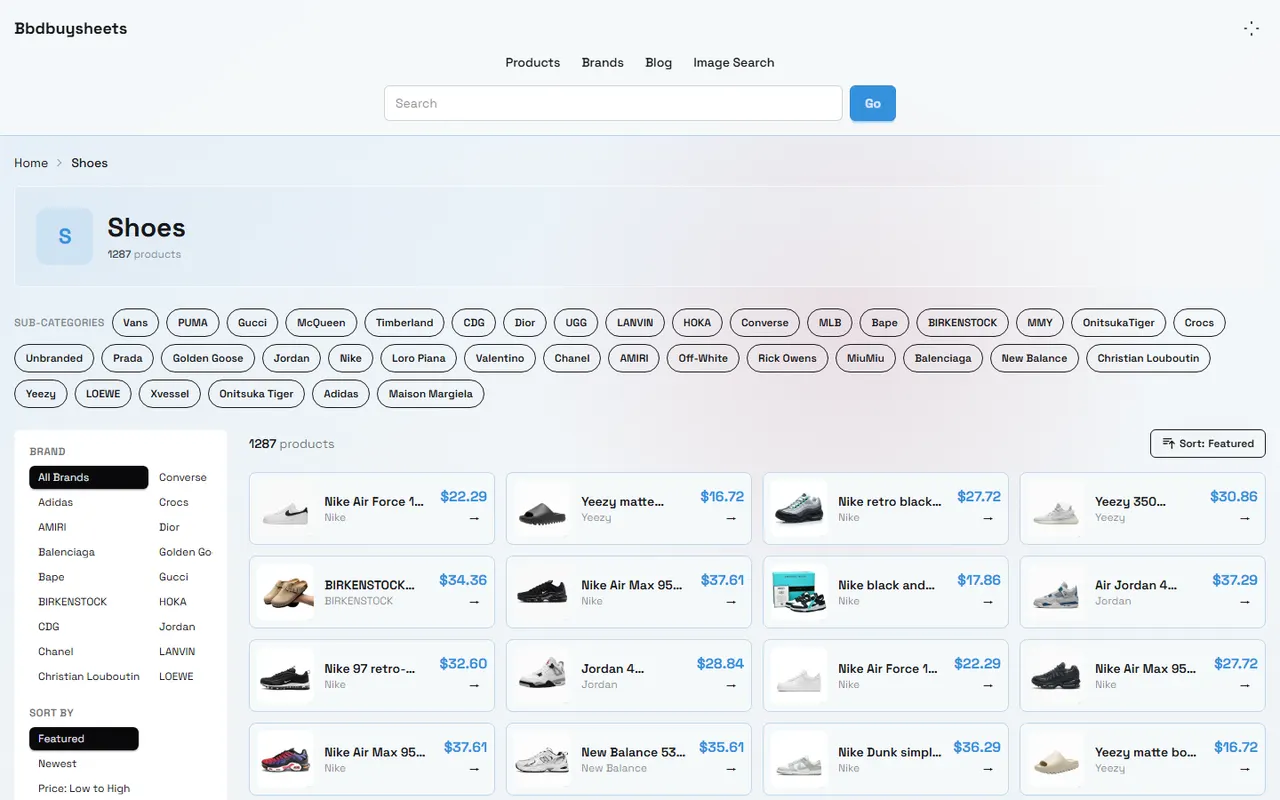
This review addresses not the vague question of "can wide feet wear a certain shoe," but rather helps buyers determine whether a current candidate has sufficient evidence to support their foot shape and usage scenario before purchasing walking shoes on bbdbuysheets.net.
After reading, you should be able to accomplish three things: first, confirm whether the product page provides real, verifiable last, size, and return information; second, arrange verification based on foot length, foot width, toe space, and sock thickness; and finally, decide whether to keep the candidate, ask the seller additional questions, or switch to another style.
This article is suitable for people with a wide forefoot, higher risk of bunions, those who walk for long periods, or those who often encounter cramped toe boxes. It is not applicable to those who need medical orthotics, acute foot pain, severe deformities, or professional sports prescriptions. Such issues should first be consulted with qualified medical or podiatric professionals.
Judgments about products on bbdbuysheets.net should be based on the corresponding product page, checkout page, and the after-sales instructions publicly available on the platform at the time. Prices, inventory, sizes, shipping, return conditions, and page links may change; buyers should re-verify before placing an order and record the verification date. 🧭
Distinguishing Product Specifications, Image Evidence, and Personal Judgment
When reviewing wide-fit walking shoes, the most common mistake is to equate "the upper looks wide" with "the actual wearing space is sufficient." The two are not the same.
Product specifications are information explicitly stated on the page, such as size range, upper material, sole material, closure method, whether wide or extra-wide is indicated, and whether foot length or width references are provided. Only what is explicitly stated on the page can be used as product facts.
Image evidence can only support limited judgments. Buyers can observe the toe cap outline, upper opening, lace hole position, outsole forefoot width, and shape from different angles, but cannot confirm internal volume, material elasticity, support strength, or actual rubbing extent based solely on images. Proportions in images may also be affected by shooting angle, lens, and display foot model.
Personal judgment needs to be clearly labeled as judgment, not a product promise. For example, a round toe outline may provide better visual space for toes, but still needs to be combined with actual internal length and width; lace-up closure is usually more adjustable for a secure fit than slip-on, but it does not mean everyone can achieve stable fixation.
When viewing candidate shoes on bbdbuysheets.net, evidence can be divided into three layers:
Specifications explicitly stated on the product page.
Appearance information that images can directly show but cannot be extrapolated.
Fit information that needs to be measured by the buyer, asked about, or verified after receipt.
If the page only says "comfortable," "loose," or "suitable for wide feet," without last, size chart, or interpretable measurement information, these words can only be used as marketing descriptions and cannot replace width evidence. 🔎
Checking Forefoot Space, Toe Box Shape, and Last Information
Wide-foot fit first looks at the forefoot, not just the total length of the shoe. Many buyers choose the right size based on foot length, but experience discomfort due to insufficient forefoot width, a narrowing toe box, or toes being forced together.
When checking the product page, it is recommended to inspect in the following order:
Whether wide, extra-wide, or other width grades are explicitly marked.
Whether foot length and width data are provided for different sizes.
Whether the size chart measures foot dimensions, shoe internal dimensions, or insole dimensions.
Whether the toe box is round, square, pointed, or significantly narrowed from the forefoot position.
Whether the upper material and opening structure may affect forefoot expansion.
Whether it states that the insole is removable, laces are adjustable, or the shoe opening has other adjustment methods.
If the page only provides foot length without foot width data, wide-foot fit cannot be confirmed. In this case, measure the widest part of both feet and ask the seller for the actual internal width of the corresponding size, the widest position of the forefoot, and measurement error.
Toe box shape also needs to be judged in conjunction with toe alignment. Wide feet do not necessarily need a longer shoe; excessive length may increase the chance of the foot sliding back and forth. What truly matters is whether toes can spread naturally, whether the first and fifth toes are compressed laterally, and whether the foot slides forward when walking.
For those with different left and right foot sizes, the larger foot should be the main reference, while confirming whether the smaller foot can be adjusted through laces, insoles, or sock thickness to reduce sliding. If the difference between the two feet is significant, relying solely on "buying a larger size" may result in insufficient fixation for the smaller foot. 📏
Arranging Size Verification Based on Foot Length, Foot Width, and Sock Thickness
Size verification should not rely solely on usual size. Different brands, lasts, and versions may differ, and size charts on product pages may use different measurement standards.
Before ordering, you can establish your own verification record using the following methods:
Measure when feet are relatively engorged and close to actual walking state during the day.
Record left and right foot length and widest width separately.
Record the thickness of socks you plan to wear, especially winter or functional walking socks.
Compare the longer and wider foot with the product size chart.
Record the measurement object and unit of the size chart; do not treat insole length directly as foot length.
For parts not explained on the page, mark as pending confirmation rather than self-supplementing.
A simple judgment framework can be used: if foot length matches but foot width exceeds the explicitly stated range on the page, ask first; if foot width appears to match but the toe box is significantly narrowed, focus on confirming the widest position of the forefoot; if the page has no width information, no clear size chart, and no useful after-sales instructions, it is not appropriate to use "looks wide" as a basis for ordering.
When trying on, use the planned socks and walk briefly indoors on a clean surface. Check whether toes can move naturally, whether the outer forefoot is compressed, whether the heel lifts, and whether the foot remains stable after laces are tightened. Do not wear for a long time just to prove the shoes fit, and do not remove tags or damage packaging in ways that may affect returns.
Evaluating Heel Collar Fixation, Walking Scenarios, and Potential Rubbing Risks
Width is only part of fit. Walking shoes also need to maintain relative stability at the heel, collar, and midfoot; otherwise, even if forefoot width is sufficient, slipping, friction, or fatigue may occur.
Different scenarios have different requirements for shoes:
Daily commuting focuses more on heel collar fixation, continuous walking comfort, and compatibility with commonly worn socks.
Short shopping trips usually accept lighter structures, but still require attention to sole flex points.
Long walks should focus on forefoot pressure, heel slippage, and upper friction.
Wet or variable surfaces require additional checking of sole tread, material descriptions, and usage restrictions; anti-slip performance cannot be judged solely from images.
A stiff collar, protruding seams, uneven tongue edges, or excessively high heel structure may be potential rubbing spots. Product images can help you spot these visible structures, but cannot prove the extent of friction after wearing. If the page lacks seams, lining, or collar structure descriptions, it is best to conservatively list the risk as unconfirmed.
Upon receipt, the first try-on should retain complete packaging, tags, and necessary accessories, and follow the platform's publicly stated return and exchange requirements at that time. If pressure, obvious slipping, or material inconsistent with the page description is found, promptly photograph the product condition, size label, and order information, but do not publicly share order screenshots containing complete personal data. 🛡️
How Return Conditions and Information Gaps Affect Ordering Decisions
For wide-foot buyers, return conditions are not ancillary post-purchase information but important evidence for risk assessment. Especially when the page lacks actual internal width, last descriptions, or try-on boundaries, return feasibility directly affects whether it is worth trying.
Before ordering, check on bbdbuysheets.net's corresponding product and checkout process:
Whether the applicable return/exchange time window is clearly stated.
Whether returns require the product to be unused, unwashed, or packaging intact.
Who bears return shipping costs, and whether there are other handling fees.
Whether size mismatch and quality issues follow different procedures.
Whether cross-border orders involve additional shipping, taxes, or destination restrictions.
Whether the after-sales contact entry, required materials, and response method are clear.
If this information cannot be confirmed on the public page or pre-checkout process, buyers should not treat "should be returnable" as an established fact. Save the product page, size chart, after-sales terms, and verification date, then ask through the platform's formal channels.
For candidate shoes whose width cannot be confirmed, the final decision can be divided into three types:
Keep: the product has clear size and width evidence, return conditions are clear, and usage scenario matches the structure.
Ask: the appearance may be suitable, but lacks forefoot width, measurement standards, or key after-sales conditions.
Switch: the page only has loose promotional language, lacks verifiable data, and return risk or cost is unclear.
Do not ignore fit risks to get a lower price. Ill-fitting shoes may lead to repeated purchases, return shipping, time loss, and long-term discomfort; these costs often exceed the apparent discount at ordering. 💡
Pre-Order Evidence Checklist for Wide-Foot Buyers
Before ordering, complete the following checks item by item:
Recorded product name, product page, and verification date.
Confirmed whether the page explicitly marks wide or extra-wide, rather than only using words like "comfortable" or "loose."
Measured left and right foot length and width, and noted measurement units.
Confirmed whether the size chart corresponds to foot length, in-shoe dimensions, or insole dimensions.
Checked whether toe box shape and widest forefoot position match your toe alignment.
Considered sock thickness for actual use.
Checked laces, Velcro, or other fixation structures.
Distinguished visible image information from unconfirmed wearing judgments.
Checked return time, product condition requirements, fees, and cross-border restrictions.
Confirmed the page has no critical gaps, such as claiming wide-foot fit without width data.
Saved questions to ask the seller and platform responses.
If two or more items cannot be completed, it is recommended to pause ordering. Pausing does not mean the product is necessarily unsuitable, but current evidence is insufficient to support a prudent decision.
Final Action: Keep, Ask, or Switch Candidate
The conclusion of such a review should not simply be written as "wide feet can buy" or "wide feet cannot buy." A more reliable approach is to place product evidence, personal measurements, and return risk in the same judgment framework.
If the product page provides clear size data, width explanations, adjustable structure, and explicit return conditions, you can keep the candidate and focus on forefoot pressure, heel slippage, and collar friction during short indoor try-ons.
If the toe box looks roomy, but the page lacks actual width or last information, ask the seller first. Questions should be specific to size, measurement position, units, material elasticity, and return requirements; do not just ask "can wide feet wear it?"
If the page lacks size basis, after-sales boundaries are unclear, or product images and text cannot jointly support judgment, switching candidates is usually safer. Do not use a larger size to mask insufficient width, nor treat evidence-free "comfortable" or "no rubbing" as guarantees.
The final recommendation can be summarized as: keep when evidence is sufficient, ask when key data is missing, switch when fit and return risks are simultaneously unconfirmable. This approach may give up a shoe that looks cheap or appealing, but reduces repeated orders, return costs, and discomfort after long walks. This method is more suitable for buyers who value forefoot space, need stable walking experience, and are willing to complete size and after-sales verification before payment; it is not suitable for those who rely solely on marketing language or require medical-grade foot support.
Verification date: September 18, 2026. Prices, inventory, sizes, shipping, return policies, and page status are subject to the public information on bbdbuysheets.net before ordering.
Agent Platform Shopping FAQ
1. Which platform currently offers the most attractive coupon for bbdbuysheets.net users?
For shoppers on bbdbuysheets.net, Kakobuy stands out because it is presently providing a $15 discount code without any minimum spend requirement. This is an excellent choice for those buying small packages. Enter the promo code kakobuy888 at checkout.
2. What is the reason for not using Google Sheets on bbdbuysheets.net?
On bbdbuysheets.net, Google Sheets is only practical for spreadsheets containing a very limited number of products. As the product count grows, loading times become excessively slow and the system experiences significant lag. This problem is worse on mobile devices, where the visual layout is poor and searching for products is extremely inconvenient. For the identical product set, the spreadsheet offered by our website loads faster and delivers a superior visual experience.
Browse our latest products and find your next favorite item.